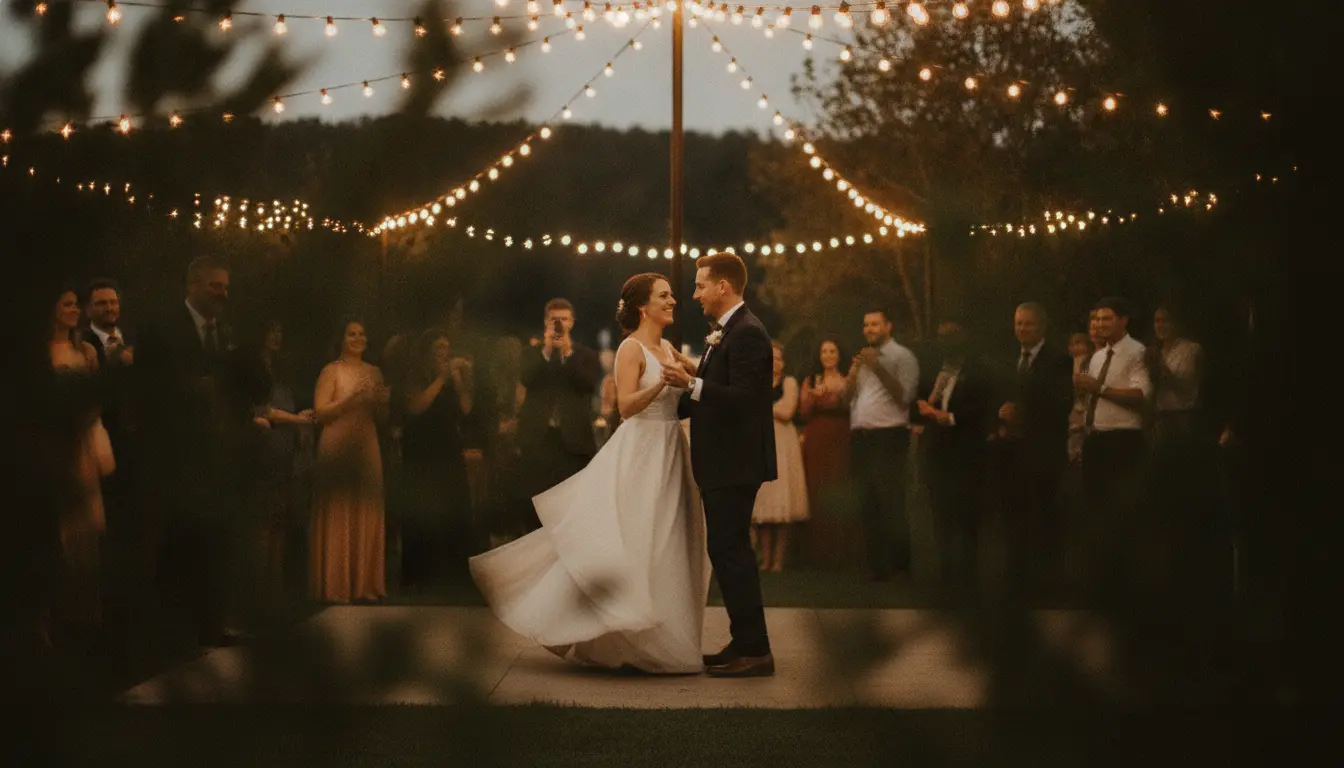
You open your email and find five different video portfolios. One reel looks like an indie feature film with moody lighting and audio voiceovers. Another looks like a crisp home movie that follows the day in exact order. Meanwhile, your wedding planning chat fills with conflicting opinions on what you actually need to book.
Key Takeaways
- Identify your desired visual aesthetic by choosing between cinematic, documentary, traditional, editorial, or vintage film approaches.
- Verify audio capture capabilities by asking whether the studio uses dedicated lapel microphones and direct soundboard connections.
- Clarify coverage logistics by confirming whether the contract includes a single shooter or a multi-camera team for separate preparation spaces.
Choosing a videographer gets confusing when studios use creative terms without explaining their process. Also, terms like cinematic or documentary mean completely different things depending on who holds the camera. You need to know what you want before you sign an agreement. This guide breaks down the primary wedding videography styles and gives you the exact questions to ask your videographer during consultations.
Understanding Core Wedding Videography Styles
Cinematic wedding videography applies narrative film techniques to your day. Studios capture footage with specialized prime lenses, creative camera angles, and dramatic movement. Then, editors build non-linear sequences layered over emotional audio clips from your vows or speeches. Consequently, the final highlight film plays like a curated motion picture trailer rather than a direct home recording.
Documentary wedding videography takes an observational approach. The filmmaker acts as a quiet observer who documents events chronologically as they happen. In addition, documentary edits preserve the authentic pacing of each moment. You see the full walk down the aisle, the complete toast from your maid of honor, and genuine background reactions without staged prompts.
Traditional wedding videography emphasizes steady, stationary recording of your key timeline moments. The team sets up tripods to capture ceremonies, first dances, and reception formalities directly. Afterward, the studio delivers a straightforward record of the day with clean cuts and minimal digital color manipulation.
Editorial wedding videography prioritizes fashion-forward staging, intentional posing, and clean visual framing. Similar to high-end magazine shoots, the videographer directs your movement to capture striking visual compositions. Therefore, this aesthetic suits design-forward celebrations where tablescapes, attire details, and architectural backdrops take center stage.
Vintage wedding videography integrates analogue textures, warm contrast, and soft grain into the final presentation. Some studios shoot genuine analogue formats like Super 8 reels or handheld camcorders. Alternatively, other filmmakers apply digital grading profiles in post-production to simulate a nostalgic film look.
How to Identify the Right Visual Style for Your Day
First, review full wedding galleries instead of thirty-second social clips. Highlight reels show only the prettiest frames set to music. Full-length feature films or ceremony edits reveal how a studio handles dimly lit reception halls, direct sunlight, and spontaneous family moments.
Next, consider your personal comfort in front of a camera lens. An editorial shooter provides active direction throughout portrait sessions. In contrast, a pure documentary filmmaker asks you to ignore the camera entirely. Decide whether you prefer quiet observation or hands-on posing cues during your photo timeline.
Finally, evaluate your venue environment across New York, New Jersey, and Connecticut. Historic manors in Fairfield County, industrial lofts in Brooklyn, and country estates in Morris County have vastly different lighting conditions. Make sure the videographer shows work shot in spaces with lighting challenges similar to your own venue.
Technical Questions to Ask Your Videographer About Footage
Before you commit to a studio, ask specific questions about camera setups and capture methods. Clear communication early prevents surprises after the celebration ends.
First, ask whether your contract covers a single shooter or a multi-camera team. A single shooter cannot capture both partners getting ready simultaneously if you prepare in different locations. Also, a two-person team allows one camera to focus on the couple while the second captures audience reactions during vows.
Second, ask what camera gear the studio uses in low light. Evening receptions in historic buildings often feature dim ambient lighting. A competent team explains their plan for supplementary lighting without blinding your guests during dinner or dancing.
Third, inquire whether vintage formats represent physical film cameras or digital filters. If you pay for Super 8 coverage, verify that the shooter uses genuine film stocks and physical cameras. Clarifying physical media versus digital emulation ensures your final package matches your visual expectations.
Fourth, ask how the studio backs up and archives footage on the wedding night. Professional teams create duplicate copies on external hard drives and cloud storage immediately. Knowing their storage plan gives you peace of mind while you wait for delivery.
Essential Audio Questions to Ask Your Videographer
Crisp audio separates an amateur home recording from a polished wedding film. Beautiful imagery falls flat if background air conditioning or street noise muffles your vows.
First, ask what dedicated microphones the team places on key speakers. A professional filmmaker attaches discreet lapel microphones to the officiant and the couple. Additionally, they place a dedicated audio recorder at the podium for toasts.
Second, ask how the videographer captures audio from the DJ or live band soundboard. A direct soundboard connection ensures clean recordings of speeches and musical performances. Ambient camera microphones alone cannot produce clear speech in a reverberant ballroom.
Third, inquire how the studio handles windy outdoor environments. Coastal celebrations in coastal Connecticut or Long Island require professional wind protection on microphones. Ask what wind muff equipment the team uses to prevent distortion during open-air ceremonies.
Comparing Deliverables and Final Edits
Every studio defines packages differently. Therefore, you must clarify exact deliverable formats before signing any agreement.
First, clarify the difference between a highlight reel and a documentary feature. A highlight film runs three to ten minutes and features artistic musical sequences. Conversely, a documentary feature runs thirty to ninety minutes and includes complete ceremony and reception footage in real time.
Second, ask whether the studio delivers raw, unedited video files. Raw footage includes every single video clip captured during the day without color adjustments or cuts. Some studios include raw clips on an external hard drive.
Third, confirm the exact revision process and review timeline. Ask how many rounds of editing adjustments your contract includes. In addition, find out what changes you can request, such as swapping out specific guest shots or correcting name spellings in title cards.
Managing Your Video Plan Across Your Wedding Team
Planning a wedding across the tri-state area involves juggling multiple vendor communications at once. When you receive videography proposals, contracts, and sample links, storing everything in one central space saves immense effort.
OurNave provides a shared checklist where tasks assigned to a partner or wedding party member show up directly on their personal task board. Also, the vendor pipeline captures quotes directly from pasted emails, keeping videographer estimates organized alongside your photographer and florist details.
You can also explore the OurNave directory of verified wedding vendors across New York, New Jersey, and Connecticut. The directory never sells placement in results, allowing you to discover regional videography talent based purely on style and verified service area.
Step-by-Step Consultation Checklist
When you sit down for your videographer consultations, bring a practical list of questions to guide the conversation. Use these concrete prompts to evaluate style compatibility and professionalism.
First, ask: How do you describe your shooting style on the wedding day? Listen for whether the studio describes an unobtrusive observational presence or an active, director-style posture.
Second, ask: How do you coordinate with still photographers during portrait sessions? A professional videographer collaborates smoothly with your photographer to avoid blocking shots or competing for timeline minutes.
Third, ask: What specific microphones will you use during our vows and toasts? Look for concrete explanations of lapel microphones, handheld units, and soundboard audio cables.
Fourth, ask: What is your estimated delivery window for the highlight trailer and the full film? Clear delivery expectations prevent frustration during the weeks following your celebration.
Finally, ask: How do you handle backup equipment if a camera or memory card malfunctions? Established filmmakers bring redundant cameras, backup audio recorders, and extra batteries to safeguard your timeline.
Once you gather answers from your shortlisted filmmakers, paste the notes directly into your planning board. Comparing team structures, audio methods, and creative styles side by side makes choosing the right storyteller straightforward and simple.
OurNave is the free wedding plan that other people can log into.
You stop being the only person who knows what is happening. Your checklist, budget, vendors, and wedding party in one place.
Parts of this article were drafted with AI assistance and reviewed before publishing.